Which Art Theory Does Not Focus on the Artworks Historical Context
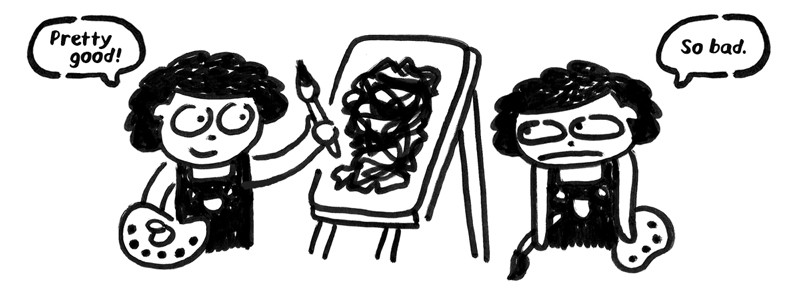
I often fence against labeling art—especially our own art—"Good" or "Bad". I believe in that location's something to be learned and gained from every slice of art we make, even if it'south just a release of mental blobbies.
Only our judgment often creeps in anyways, and so information technology's worth digging into how nosotros respond to our art.
iv Theories for Judging Fine art
Your response to your art stems from what you lot believe art is and what its overall purpose is. At that place are 4 principal theories for judging whether a piece of art successful: Imitationalism, Formalism, Instrumentalism, and Emotionalism.
Chances are, you already believe in one of these theories, even if you've never heard of them. Realizing which theory resonates most with you tin can help you make crucial decisions in your artmaking. Or perhaps yous'll observe that you thought y'all believed one theory, but you actually believe another!
I purposefully did not include example artworks beneath, because I don't desire to influence which theory you are fatigued to based on the pieces I chose. Try to really run into which theory fits best with your truthful core beliefs!
Ok, let's have a expect at the four theories.
Imitationalism
Art is good when it imitates reality.
An Imitationalist artist focuses on mimicking and representing real life. In a successful piece of art, the textures, lite, shadows, homo proportions, and perspective are all highly realistic, as if y'all could reach out and bear on them.
Ceremonial
Art is practiced when information technology masters the artistic elements and principles.
A Formalist artist focuses on an artwork's grade—the way its made and what it looks like. In a successful piece of art, the visual features are most important: line quality, color, composition, and other artistic elements and principles.
Instrumentalism
Art is good when it communicates a message.
An Instrumentalist creative person focuses on context and message. A successful slice of art is an instrument to persuade the audience or provide commentary. It is oft political, social, moral, or thought-provoking.
Emotionalism
Fine art is good when information technology evokes an emotional response.
An Emotionalist creative person focuses on the expression of emotion. A successful piece of art communicates an emotion, simply more importantly, it pulls out an emotional reaction from the viewer.
What Makes Good Art to You?
Personally, I'm a mix of Emotionalism + Ceremonial. I focus on the expression of my own emotions and moods and aim to evoke those aforementioned emotions in the viewer. However, my background is in Graphic Pattern, so I also accept a strong dear for the formal aspects of an artwork, like limerick, line, and color.
I am uttermost away from Imitationalism, though it may exist the most normally held theory. I certainly believe it'south technically impressive when art tin can imitate reality, but I accept no desire to do so myself, and my personal belief is that realism is not the most important aspect of an artwork.
To notice which theory (or a mix of theories) fit you best, you'll need to think most where your artmaking desires and your personal conventionalities in what makes a piece of art good marshal.
What Theory Are You?
Information technology'southward important to recall there is no right or wrong theory. Fine art is subjective, and the judgment of whether an artwork adept or bad is a matter of personal opinion.
But realizing which theory you naturally gravitate to tin help you recognize what you do or don't similar well-nigh your own work. When nosotros tin can see more clearly why we believe our art is good or bad, we use that knowledge to nudge our art more in the good direction.
And so which theory fits best with you?
gainesvearguat1972.blogspot.com
Source: https://might-could.com/essays/what-makes-good-art/
0 Response to "Which Art Theory Does Not Focus on the Artworks Historical Context"
Postar um comentário